The Serialisation project has been unfolding during the past 3 years, converging a network of professionals whose sole objective is to protect patients’ safety.
OSMR would like to share within the extended community of individuals involved or impacted by the project, different opinions about the project implementation and its implications.
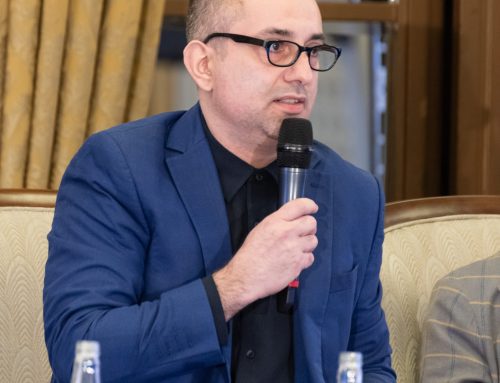
We are opening the series: Pharma Industry’s Perspectives on Serialisation with Mr. Dragoș Damian – General Manager PRIMER – Patronage of Industrial Medicines Manufacturers in Romania, who shared with us some of the challenges that the serialisation project brought to the medicines factories in the country:

“As it is well known, starting with February 9th, 2019, prescription-based medicines must bear the safety features to allow their identification and authentication in the National Medicines Verification System (NMVS) and subsequently their verification and decommissioning to the patients.
The safety features consist of a Unique Identifier (encoded in 2 two-dimensional code – 2D Data Matrix), which contains the following data elements: product code, batch number, expiration date and serial number, and an anti-tempering device.
Medicines manufacturers apply the safety features to the packaging of medicines. This was one of the biggest challenges because it meant changing the production lines, which in turn led to an increase in the production cost by approximately: 2-3%. Quite frankly, the biggest challenge was not the serialization itself (application of the code, i.e. technology and IT platforms) as much as finding the adequate tampering solution to retrofit such variety of equipment. However, the price of the medicines did not increase with the introduction of these new changes.
Moreover, the medicines manufacturers must connect to the European Hub to upload the data on the serialized products and register with OSMR in order for the medicines data uploaded to the European Hub to reach the NMVS. This means adapting IT systems to be able to manage serialized products.
PRIMER’s main concern in the serialisation project was to ensure the presence on the market of medicines manufactured in Romania that comply with the provisions of the Falsified Medicines Directive and of course, patients’ access to authentic medicines. The estimated volume of PRIMER’s medicines which underwent serialization is around 250 million boxes / year.
Implementing such a project with an increased complexity both from the point of view of the stakeholders involved, as well as considering the technical aspects approached, brings to the forefront the utility of innovations in the field of technology that can ensure an increase of transparency in the legal supply chain and an improvement in the quality of data entered into such a verification system.”