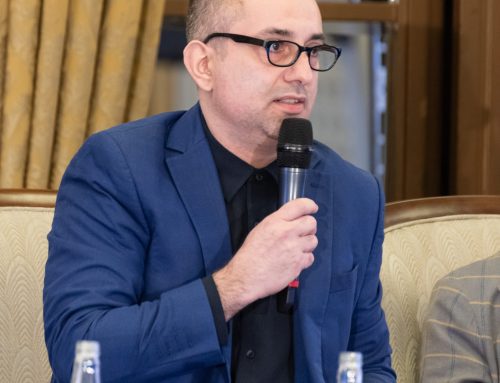
We are delighted to welcome to our virtual space of sharing Pharma Industry’s Perspectives on Serialisation, Mr. Ioan Nani, Antibiotice S.A. General Manager.
Mr. Nani offered us a glimpse into the serialisation process from the generic medicines industry’s point of view, touching on the benefits of this one-of-a-kind project.

“It is clear that the greatest benefit being offered by this project is patients’ safety protection by ensuring no falsified medicines enter the legal supply chain. The aim of the project is closely linked with one of our core values, that of caring for human beings and of doing our best to support them and trying to improve the things they find important, such as lifestyle quality.
Thus, the serialisation project is a great endeavor which is very important to all of us working in the company. Nevertheless, the project implementation meant a great financial effort not only for our company, but for the entire generic medicines sector.
The investment meant serializing the medicine packs, which more concretely meant placing the safety features on the respective packs, safety features consisting of a Unique Identifier (encoded in a 2D Data Matrix Code), containing the following elements: product code, batch number, expiration date and serial number, and an anti-tempering device (guaranteeing that the medicine pack is first opened by the patient). Thus, for the serialisation process to be implemented, the production lines needed to be changed, this meaning an increase in the production cost.
Furthermore, each pharmaceutical company is responsible for funding the overall European Medicines Verification System, meaning both the EU Hub and the National Medicines Verification System.
Considering all that I have mentioned before and the fact that the generic medicines have a lower risk of being falsified, we, in the industry, have come to the conclusion that patients’ access to safe medicines prevails and we consider it a benefit that you cannot put a price on.”